TeachingEnglish newsletter | | | Welcome to this special edition of the TeachingEnglish newsletter!
In addition to two special lesson plans to mark the first day of spring and International Women's Day, news of our new blog topics and format, and lessons to mark St Patrick's Day, we also feature resources of particular relevance to the Middle East and North Africa.
And if you are interested in becoming part of a teacher network in this region, you can find a list of associations and networks here.
We hope you find these resources useful.
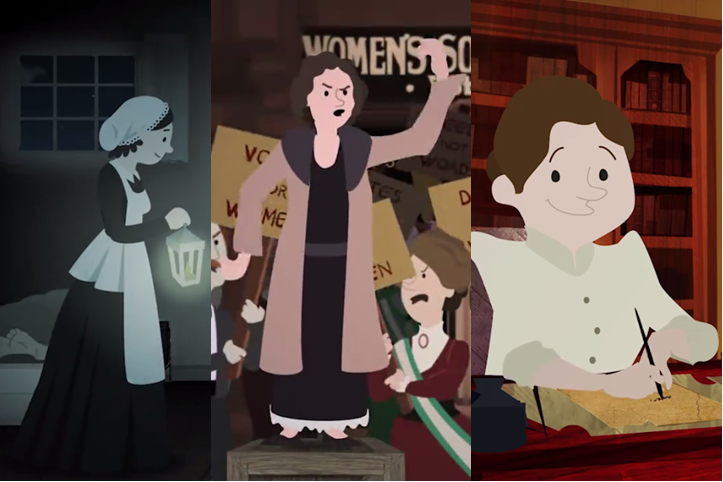
The TeachingEnglish team | | Blog topics March 2020 – a new format! | After a short break from the blog, during which time the TeachingEnglish website has been updated, we are back with a new format and a new list of topics. Until recently, there were four topics available every two months. From April 2020, there will be three topics every three months, which will focus on an aspect of classroom practice and teacher development. The topics for the next few months are: Feedback, Quiet students, Inclusive learning, and Motivating teachers (teacher educator topic). Read more. | | | How language affects refugees' abilities to access education, training and employment | In 2016, as part of the response to the Syrian refugee crisis, the British Council commissioned research on the role of language in enhancing the resilience of Syrian refugees and host communities. As an insight into this research, five blog pieces were produced and published. This first piece, by Chris Sowton, focuses on the importance of language in schools, training centres and workplaces in refugee communities, and discusses how important this is, especially given that so often these find themselves economically, socially and politically marginalised. Links to other pieces can also be found on this page. | | | Celebrate the first day of spring in the northern hemisphere on 20 March with this lesson for primary learners. Children identify the objects on their worksheet together and then go outside or look at pictures inside the classroom to see what they can find. As spring progresses, more and more of the animals on the worksheet appear, so your students may enjoy doing the activity at the beginning, middle and end of the season. | | | Perspectives on English in the Middle East and North Africa | This is a collection of papers written by both UK and Arabic academics on the theme of how the growing knowledge and use of English is affecting the region. The researchers have tackled a broad range of topics: interfaith dialogue, the influence of English on individuals’ life chances, social inclusion and English in the workplace. You can download this book as a PDF file here. | | | This lesson for older teen learners and adults, devised for International Women’s Day on 8 March, will help to raise awareness of some not very famous, but nonetheless important, women. Students think of well-known people that they consider to be heroes. It is likely that many of these will be men, so the students then go on to learn about five remarkable women in a jigsaw reading activity. They discuss these women’s achievements, and learn some useful vocabulary for talking about social issues. | | | These two articles deal with the topic of intercultural awareness and learning. The first sets out the methodological background to the topic and looks at what we understand by 'culture', communicative competence, the role of the teacher and when to introduce this. The second article offers practical suggestions for the classroom and looks at perspectives on communication and ways to develop intercultural communicative competence. | | | St Patrick’s Day, 17 March, is now celebrated throughout the world, not just in Ireland, with the largest parade taking place in New York City. This festival is full of magical stones, Irish fairies, hidden treasure and lucky charms – everything's green, and there’s even a rainbow with secrets at the end of it. What more could you ask for in a fantasy-filled English primary lesson? In the lesson plan for teachers of teenagers and adults at upper intermediate level, learners read an article and talk about the customs and traditions of their own country's national day. | | | | | British Council teacher community on Facebook | | | | | | |
|
























 Postingan

