Rabu, 13 Desember 2017

TeachingEnglish newsletter 13 December 2017

TeachingEnglish - the global home for teachers
13 December 2017

Welcome to the TeachingEnglish newsletter
Welcome to the final TE newsletter of 2017! The TE news will be taking a break over the festive period but we will be back with more great resources in 2018.

For the classroom this week we have a new lesson plan for kids about the solstice, which occurs on 21 December, and some festive ideas for teens. We also have some tips and ideas on how to use poems, quotations and proverbs with your adult learners.

We feature an interesting and practical blog post on integrating WhatsApp, and we are pleased to announce that a TESOL Electronic Village Online (EVO) on 'Classroom-based research for professional development' will be live again in January-February 2018.

And, finally, on 9 January join us for our first webinar of 2018, when winners of the ELTons award for Local Innovation will show how their innovative technology can be used to teach the English language using the mother tongue.

We hope you find these resources useful and we wish you all a peaceful festive season.

Deb
TeachingEnglish team
Teaching kids

In this lesson for primary learners aged 9-12, students learn about one of the most important events on our planet - the solstice, which occurs on 21 December. Teachers explain the phenomenon using a ball and light source before discussing the diagram on the worksheet with students, who complete a gapped text. Students extend and consolidate their understanding with a reading activity and further activities about the seasons.

Teaching teens

Christmas is an excellent theme for adding games and fun to your teaching. Most students enjoy festive lessons if your activities encourage a personal contribution about the students' own families and customs. With 'Christmas tips', you can look at history, customs and traditions, food and drink, songs and carols, poems and literature, or discussion topics.


Teaching adults

Learning a language does not just mean saying something new. It helps to also practise saying words and sounds. 'Using poems, quotations and proverbs' includes some practical activities for students to enjoy the music of English, in addition to a list of links to poems, quotations and proverbs for you to choose from.


Development

With a focus on teacher-research to address difficult teaching situations, a TESOL Electronic Village Online (EVO) on 'Classroom-based research for professional development' will be live again in January-February 2018. This EVO provides a hands-on introduction to inquiry-based teacher development, especially (though not exclusively) for teachers working in difficult circumstances. Registration is open 1-13 January 2018 and activities run from 14 January to 17 February.


Events

In this webinar, 'Leveraging technology to effectively teach English language in the mother tongue of the learner', on Tuesday 9 January 2018, winners of the ELTons award for Local Innovation will show how their innovative technology, Mavis Talking Books, can be used to teach the English language using the mother tongue as the language of instruction.


Magazine

There is a great variety of pedagogical applications of mobile technology in ELT, including WhatsApp. Read Loli Iglesias's practical blog post to find out more about how to integrate WhatsApp in the classroom to foster listening and speaking. In addition to describing some of the advantages of incorporating WhatsApp, Loli also describes an example of a project and offers some useful suggestions.


You have received this newsletter because you registered on our website or previously showed interest in British Council news. If you wish to opt out of future newsletters, please unsubscribe here.

British Council, 10 Spring Gardens, London, SW1A 2BN United Kingdom
Sent by teachingenglish@britishcouncil.org in collaboration with
Constant Contact

Rabu, 06 Desember 2017

TeachingEnglish newsletter 06 December 2017

TeachingEnglish - the global home for teachers
6 December 2017

Welcome to the TeachingEnglish newsletter
This week we are pleased to announce a new, free course for those of you who teach or work with young learners - 'Understanding Child Protection'.

In anticipation of the coming festive season, we feature a lesson based on Charles Dickens' A Christmas Carol. For kids we have a range of drama-related activities to encourage speaking in class. We also have a discussion activity for adults and older teens - 'Developing a Nation'.

We feature a webinar recording of Averil Bolster and Peter Levrai discussing 'Develop EAP: A Sustainable Academic English Skills Course' - winner of the 2017 British Council ELTons Award for Innovation in Learner Resources.

And finally, take a look at this new publication - 'English language and medium of instruction in basic education in low- and middle-income countries: a British Council perspective'.

We hope you find these resources useful.

Deb
TeachingEnglish team
Teaching kids

For young children and adults alike, it can be intimidating to speak a foreign language in front of other people. Even five-year-olds can be scared of making mistakes and looking silly, or it may just be that they are shy and don't want to talk in class. One way of reaching these children is through drama. Here are a few suggestions on using a range of drama-related activities and creating supporting tools like masks and theatres that will help you play with the language with your pupils and have lots of fun at the same time.

Teaching teens

In this lesson for teen or adult students at B2+ level, they read an extract from Charles Dickens' A Christmas Carol and examine the characters in the text. They then discuss the theme of festivals as preparation for a writing task on the same topic. 


Teaching adults

This is a group-work speaking activity for B1 level and above, where students are asked to make choices about the future economic development of a fictional developing country. Skills include expressing opinions, decision making and presenting choices with justifications.


Development

We are happy to be able to offer the online training module 'Understanding Child Protection' free of charge to all teachers. In this introductory course, you will gain an overall understanding of the topic, consider some issues which can arise for the teacher and the learners, and gain some practical tips for best practice in the classroom.


Events

In this webinar recording from the event in November, Averil Bolster and Peter Levrai discuss 'Develop EAP: A Sustainable Academic English Skills Course', winner of the 2017 British Council ELTons Award for Innovation in Learner Resources. They talk about key features of the course, e.g. collaborative learning, exploiting e-learning spaces and use of QR codes, and focus on the UN's Sustainable Development Goals and their suitability for EAP programmes, being relevant over multiple cohorts and to single- or mixed-discipline classes and learners of different language levels, including native English speakers.

Magazine

This new paper, 'English language and medium of instruction in basic education in low- and middle-income countries: a British Council perspective', aims to open up discussions on the role of English in multilingual education. It is hoped that this paper will be of practical help to policymakers and advisers, project managers and implementers, and to English language teachers.


You have received this newsletter because you registered on our website or previously showed interest in British Council news. If you wish to opt out of future newsletters, please unsubscribe here.

British Council, 10 Spring Gardens, London, SW1A 2BN United Kingdom
Sent by teachingenglish@britishcouncil.org in collaboration with
Constant Contact

Minggu, 03 Desember 2017

LearnEnglish Kids newsletter December 2017

British Council
LearnEnglish Kids newsletter
December 2017

Welcome to the latest LearnEnglish Kids newsletter.

VIDEO ZONE
Have you seen our Video zone recently? We are adding more videos every month!

Watch our latest video, Make a sock snowman, to find out how to make a great Christmas decoration! Kids can also try our other new videos, Abbie's bullying story and What are child rights?
 
CHRISTMAS!
Do you celebrate Christmas? Children can have fun and practise their English with lots of Christmas activities on LearnEnglish Kids, including songs, stories, games, worksheets, crafts and more.

If your children want to write about celebrating Christmas, members can tell us all about it on our Christmas your turn! Merry Christmas!

HANUKKAH!
What do your children know about Hanukkah, the Jewish Festival of Lights? Kids can learn more about it with our fun Hanukkah activities! Try our Hanukkah Reading practice, play games with our Hanukkah flashcards and make our Hanukkah card craft.
 
Have a happy Hanukkah!

CRAFTS
Do your children have holidays from school soon? Our Crafts section has lots of great activities to keep them busy!

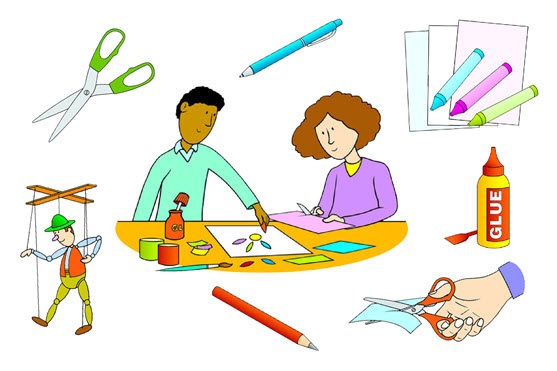
If it's winter where you are, kids can make a fun snowman or snowflake, or a Christmas tree to celebrate Christmas! There are many other crafts too, including games, puppets, masks and musical instruments! Have fun!

LETeens


Are you aged 13-17? Are you learning English? Go to our LearnEnglish Teens website to find lots of free resources to help you pass exams and have fun while you learn English online.    


Are you learning English? Have a look at LearnEnglish to find lots of resources to help you practise your English.


Do you teach English? Find lesson plans, articles and more on TeachingEnglish, the website for teachers brought to you by the British Council with the BBC.


Visit our Premier Skills website to learn two of the world's global languages - English and football.


British Council Learn English, 10 Spring Gardens, London, England SW1A 2BN United Kingdom
Sent by learnenglish.kids@britishcouncil.org in collaboration with
Constant Contact

Cari Blog Ini

BBC Learning English

Pengikut

Arsip Blog